Diagnosing Hunger:
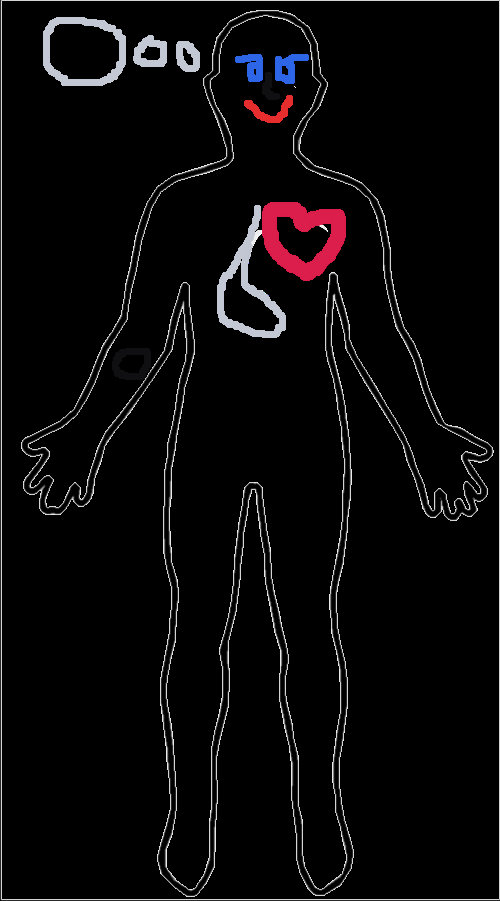
Where are you hungry?
What are you really hungry for?
Do you want a chocolate, or a hug?
How do you diagnose hunger?
Unlike other animals, humans seem to eat for a number of reasons, that aren’t always about nourishing the body.
You could use the following rules of thumb to help you diagnose whether you are responding to physical hunger or feeding a deeper emotional need.
Physical Hunger:
· Builds gradually
· Strikes below the neck (e.g. growling stomach)
· Occurs several hours after a meal
· Goes away when full
· Eating leads to feeling of satisfaction
Emotional Hunger:
· Develops suddenly
· Above the neck (e.g. a “taste” for ice cream)
· Unrelated to time, (it doesn’t seem to matter whether it’s meal time or not)
· Persists despite fullness
· Eating leads to guilt and shame
What are your signs of hunger?
What does physical hunger feel like to you?
How do you know when you are hungry?
What does Emotional Hunger feel like to you?
Is it associated with a particular feeling? Can you name the feeling?
Could it be mistaken for another feeling like: boredom, stress, anxiety, loneliness, frustration?
Watch this short video to see all the different types of hungers that can trigger us to eat, then practice getting curious with yourself.
Understanding Eating Triggers: 10 Reasons People Eat
See if you can start to identify true hunger versus other needs.
How could you go about meeting these other non-hunger needs that in the past you might have soothed by eating other than eating?
References:
Doris Wild Helmering and Dianne Hales, Think Thin, Be Thin (New York: Broadway Books, 2004): 77.
Wansink, B. (2010). Mindless Eating: Why We Eat More than We Think. New York. Bantam.
Bays, J.C (2009) Mindful Eating: A Guide to Rediscovering a Healthy and Joyful Relationship with Food. Boston: Shambhala
Spread the Word to get this healthy message out! Like or share this page with your friends on your fave social media platform!


