You can set new goals, and “resolutions” any time of the year, but since it’s topical at the moment- being January, I thought I would share our process.
Goal Setting process:
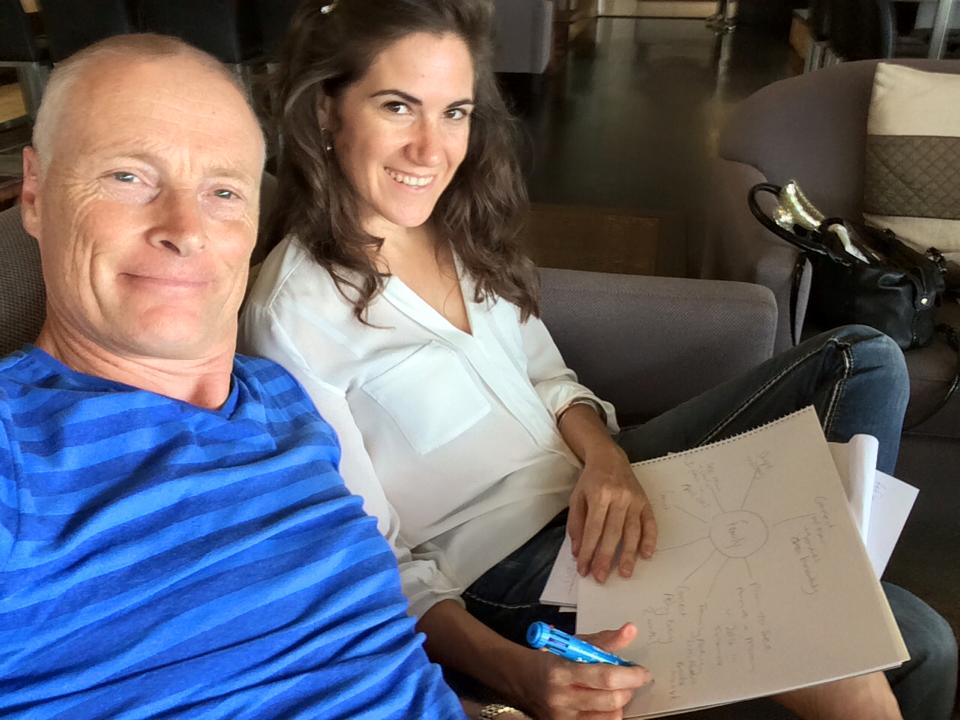
Step 1. Reflections: Think back over the previous year. Get a big piece of paper and jot down your achievements (what can you celebrate or build on) for the year and your learnings (the stuff that didn’t go so well and you want to pause and reflect on why! What can you learn from, where did you get stuck, where did you stumble, where did you give up and why, where did you make a wrong turn?) We like to do two separate pages, one with the word “Achievements” in a circle in the centre of the page and then little spider leg or bicycle spokes going out from it with each point written down. Same process for “Learnings”. This gives you a base from which to build your future goals.
Step 2. Dreaming and intentions: Allow one page per “area of your life” that you feel is important. (Popular examples: Spiritual, Financial, Business, Family, Health, Personal, Relationship). In the same spider diagram style or just in a column under a title, scribble down some key intentions and big visions for each category.
Step 3. Goal break down: Go through each of the pages and categories and decide on your top 15 goals for the year, with those important things in mind. Remember to add numbers to your goals and make them quantifiable and measurable. For example “I want to say something nice to my partner everyday.” “I am going to go to the gym every Tuesday and Thursday for 45 minutes on the way home from work.” “I want to fit back into my Size Fantastic Jeans before Easter.” “I will save $200 a month so that by this time next year I will have enough money for a flight to Paris.” “Help 1000 people get fit and healthy by 2016.” (You may also be familiar with the popular approach for goal setting is SMARTA – Specific. Measurable. Achievable. Realistic. Timely. Accountability.) The more detailed your goal, the better.
Step 4. Implementation: Get strategic. A goal without a plan is just a dream. Think about how you will action them… What is your critical path, working backwards? What actions, values, intentions, strategies, resources, daily habits and specific actions are required to achieve the goal? Break each one down. Some will be straight forward, some goals will require a few little goals in between.
Step 5. How are you going to remember? A habit or a goal is something new and unfamiliar so we don’t automatically think about it or do things to achieve it yet. You may have to put thought into cues or reminders or triggers to help you remember to implement or to motivate you to implement. Think about some appropriate monthly, weekly, daily habits and action cues? For example, we have some on our bathroom mirror. I have some in my diary. I have some on my fridge. I have some in my calendar on a wall. For some I get others involved, like my husband, I ask him to support me so that I can accomplish them.
Step 6. Make it easy to get started! You have to have an easy first step at least… What is the first step and how can you make it very EASY or very WORTHWHILE for yourself to take it. How can you make easy to implement or fit into your existing routine or program or piggy back on an existing routine or scenario? For example, a goal for me might be to “Get Fitter”. I might write down a plan for myself: Dance Classes and Gym. I then can check the dance timetable and find out which dates fit into my routine best. I might map out the gym classes with the least resistances. I then might book those times into my diary each week for the next three months. I discuss it with my partner and make necessary arrangements for our family around those times, so that doesn’t become a tension point. I then might ask my partner to encourage me to go the first time even if I don’t feel like it and say “Well done Honey” when I get home. I might ask a friend to join me for dance classes or meet me afterwards for a quick drink after my first class as a reward for committing and getting there (be it a tea, sparkling water or wine).
Step 7. Put cues and reminders and prompters and “inspirers” up so that you take action.
Step 8. Focus on the end game: Just do it and keep at it long enough for it to become a habit. One step at a time… might not make a difference immediately but given time, effort and commitment you will be surprised how far you can go!
Step 9. Don’t Give Up on Yourself! Remember: passion= suffering. Just because something takes effort doesn’t mean its not worth doing, be careful of daily indulgences because they may cost you ultimate happiness. Keep your focus on the bigger goal and your reason behind setting the goal and persevere!
Spread the Word to get this healthy message out! Like or share this page with your friends on your fave social media platform!


